
November 28th- December 5th
This leg was supposed to be just Juan David and me, but delays in Ecuador meant I couldn’t make it to San Diego in time for Thanksgiving with Marina. Instead, she joined me in Quito, where we celebrated at my son’s place with my father, sister, brother, and nephew. We grilled meat and vegetables and opened a few bottles of Chilean Cabernet Sauvignon.
The soirée lasted late into the night. At 4 a.m. the next morning, Juan David, Marina, and I drove to the airport to catch our flight to Bogotá, connecting to Cartagena. We were exhausted when we finally arrived at Marina Manzanillo in the early afternoon of November 28.
Marina Manzanillo was a far cry from Marina Club de Pesca. It is located about twenty minutes farther south in a less desirable part of town rife with garbage, drugs, prostitution, and crime. Hector had called ahead to inform them of our arrival, and the guard on duty was waiting for us. After recording our names in his logbook, he escorted us to our slip.
The slip was by the channel overlooking some dense mangroves—a nice location if you discount the inside of the marina. For once, BEHEMOTH was ready to go. The varnish and parts of the teak on deck were showing the toll of sun and rain, and Hector had neglected to address it. But aside from needing a new solenoid, which Alexander would replace the next day, all mechanical and rigging issues had been resolved. We unpacked, settled in, enjoyed drinks in the cockpit, and later took an Uber to the old city for dinner.
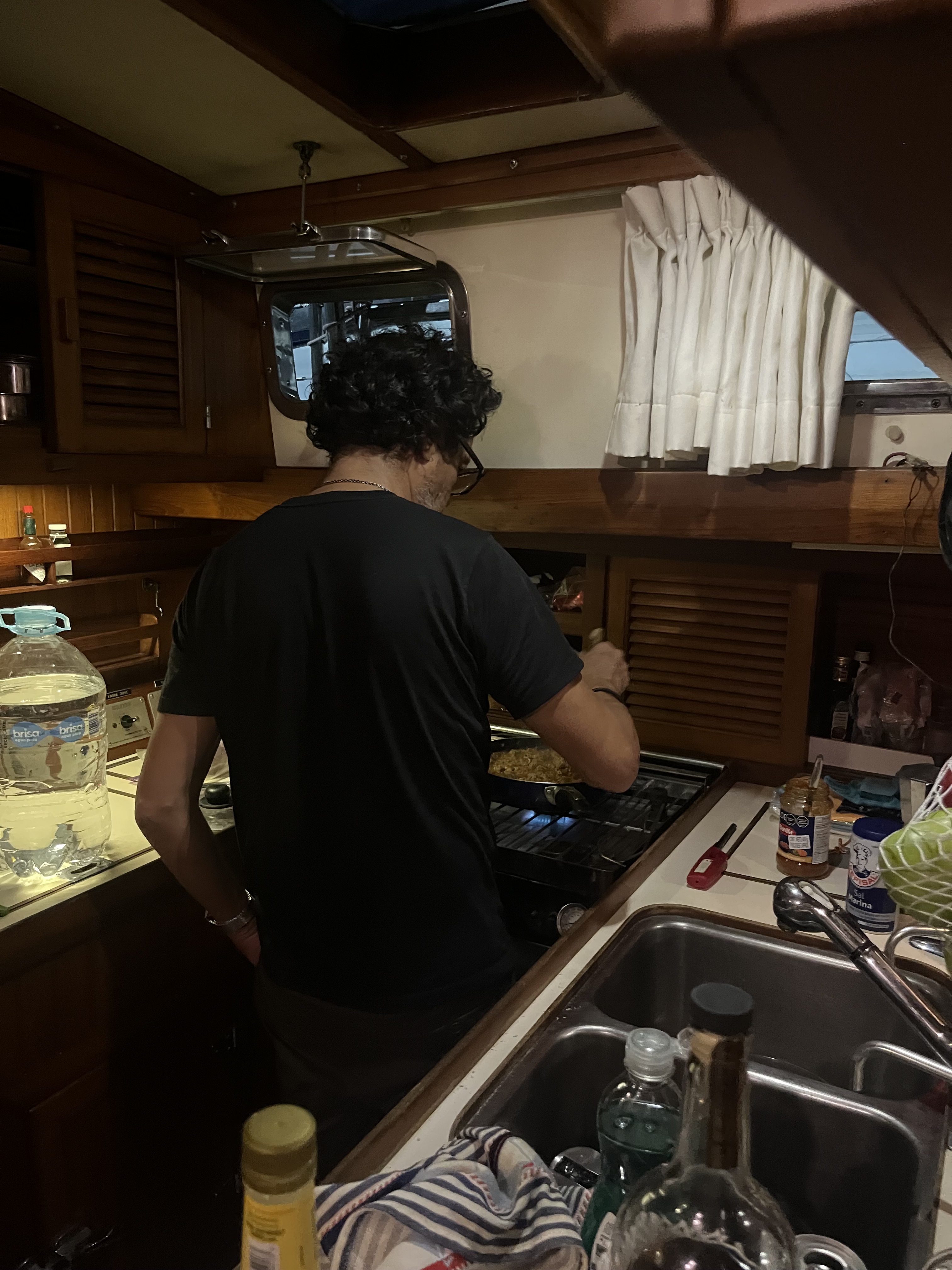
The following morning, Marina and Juan David went out for lunch and grocery shopping, and I stayed behind coordinating the solenoid installation with Alexander and preparing BEHEMOTH for the short passage. That evening, I cooked pasta Bolognese for dinner saving some for meals during the trip. We went to bed early, planning for a Sunday departure. Juan David and Marina needed to be back in Quito and San Diego, respectively, by Thursday—Juan David to teach and Marina for an exam.
I had trouble sleeping that night. A few things still needed to be purchased, the most important being a cable to charge the YB tracker. BEHEMOTH doesn’t carry a satellite phone or EPIRB, and after losing ANTARES two years ago, I don’t think much of the latter. The tracker, however, is a reliable backup for communication when all else fails, including Starlink. It had been with me when I abandoned ship, allowing others to track my location.
In the morning, I informed Juan David and Marina that we would delay our departure until Monday. They weren’t thrilled, but the idea of another evening in Cartagena cheered them up. After breakfast, Marina and I went shopping, picking up the cable, an extra headlamp, and a kettle for boiling water during the passage.
On Monday morning, I was up at 05:00, woke the kids, and walked to the marina’s gas station to inform them we’d be refueling. By 07:00, our diesel tanks were full, and we were underway.
Not long after, we ran aground. I had been tracking our location on my iPhone’s iNavX until Juan David spotted the channel markers. Unfortunately, we missed the first set of buoys. Luckily, the bottom was pure sand and we managed to reverse BEHEMOTH out of the shallows.
By 08:00 we exited the shipping channel at Boca Chica, set the staysail and the main with two reefs for stability. With winds under 10 knots, we motored west, setting a course of 270° magnetic. The autopilot steered as we secured lines, fenders, and tidied the cabin. However, the boat’s rolling motion revealed we hadn’t secured dishes, glasses, and cookware well enough. I added friction mats and cloth to reduce clattering but realized we’d need better storage solutions for longer passages.
At noon, I logged:
• Position: N10 18.171 / W75 57.191
• Wind: NE 10 knots
• Speed: 5.5 knots
• Course: 272°
• Status: Motoring for 5 hours, main double-reefed, staysail set
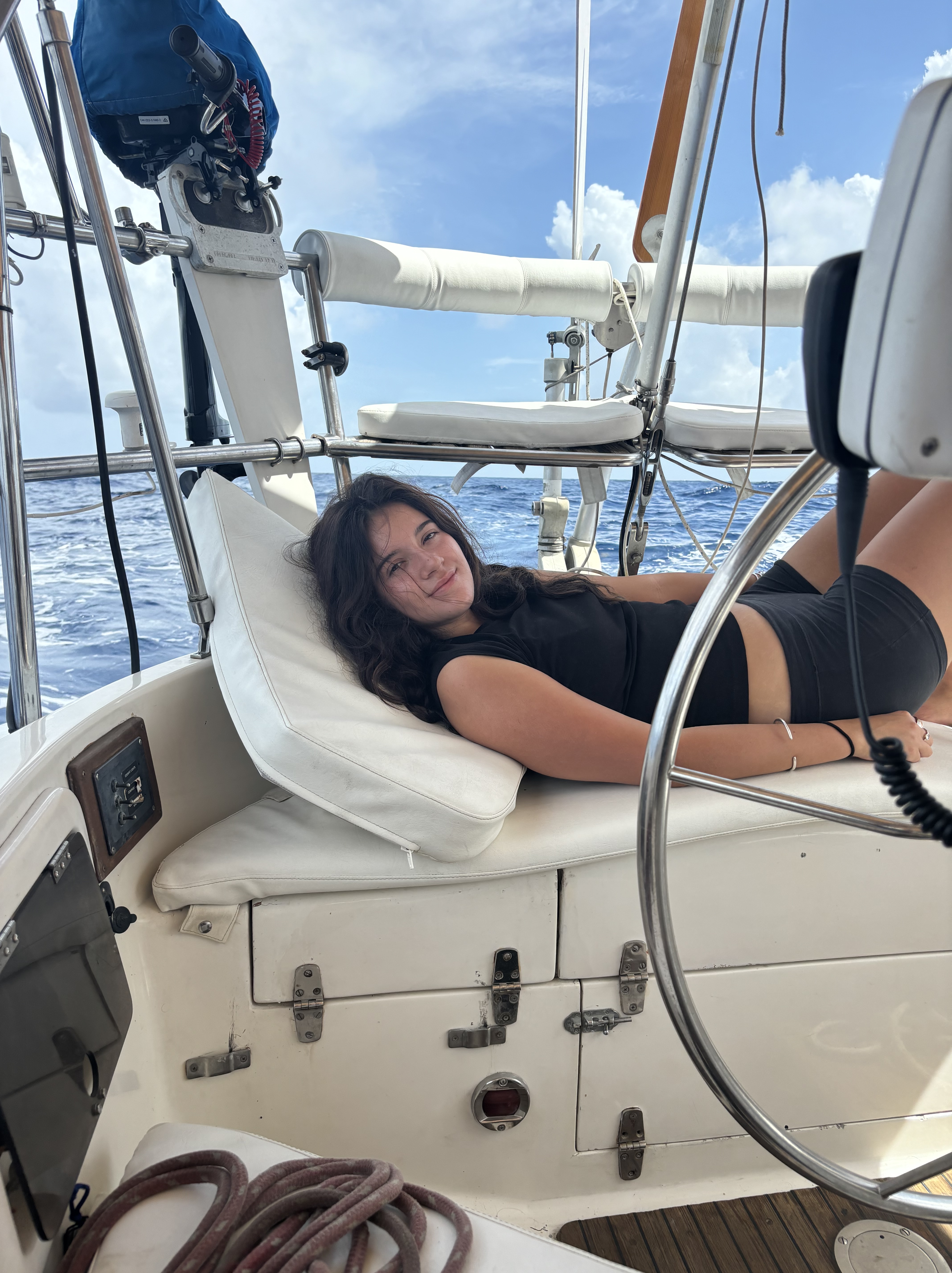
Marina and Juan David were enjoying the trip. For Marina it was the first time sailing out of sight of land. I, on the other hand, was relieved to leave Cartagena but apprehensive about potential mechanical issues with BEHEMOTH’s blue and red monsters.
By 17:00, I poured rum for Juan David and a gin and tonic for myself. Marina, feeling seasick, avoided food and drinks but joined us in the cockpit for a sunset that never quite materialized. As night fell, I updated the log, turned on navigation lights, and awaited the forecasted wind increase.
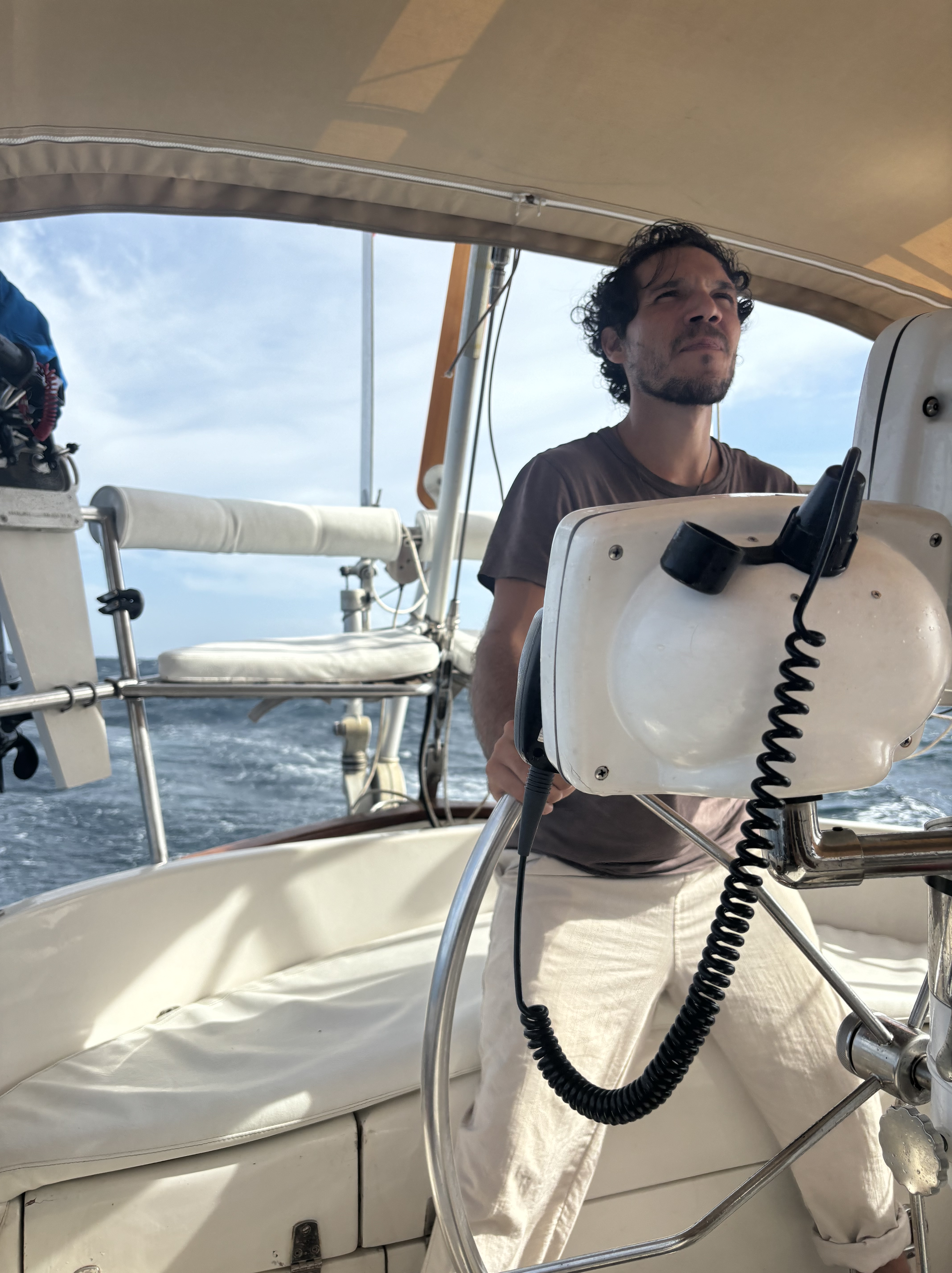
At 23:00, the wind picked up to 17–20 knots, gusting 25. I turned off the engine, and BEHEMOTH showcased her sailing prowess. The autopilot held steady, guiding us through a starry, moonless night. We donned extra layers against the chill and planned three-hour watches.
Juan David spent his watch mastering the chart plotter and AIS operation. This proved invaluable as we were sailing in the middle of the shipping lane connecting Cartagena and Colón. We encountered at least ten large container or cruise ships. Each time the AIS alarm sounded, the chart plotter displayed the ship’s name, speed, and course—usually similar to ours or on a reciprocal heading. I hailed them on VHF, “This is sailing boat BEHEMOTH, limited maneuverability, can you see us on your AIS?” Most acknowledged us with well wishes, though one Chinese vessel could only see us on radar, not AIS.
I managed only one or two hours of sleep that night. At dawn, I found Juan David and Marina in the cockpit watching the sunrise. I prepared coffee and started the red monster (the generator) to charge the batteries. It ran fine, but there was no water discharge— the recently replaced water pump had seized and my attempts to fix it were unsuccessful.
Then came the turn of the blue monster. It too ran well, but the alternator wasn’t charging properly. The batteries received just one-fifth of the usual charge. BEHEMOTH has two solar panels that usually do the job — with no autopilot working continuously— but the day was cloudy. I was frustrated. After all these months in Cartagena the problems that hunted the two monsters hadn’t been fixed.
By early afternoon, it was clear we couldn’t rely on the autopilot and chart plotter overnight. We would hand-steer using the compass and my iPhone to check our position from time to time. Juan David and Marina were unfazed. Their appetites returned and had sandwiches and leftover Bolognese for lunch. For dinner I cooked some rice that we ate with tuna.
After drinks and a subdued sunset, we began steering shifts. Marina took the helm first, managing an impressive three hours before heading below to rest. Juan David stayed with her, half-asleep in the cockpit, while I managed a couple of hours’ sleep below.
When I returned, the wind had increased to 20–25 knots, gusting 30. Marina was resting, and Juan David was steering. Although BEHEMOTH felt overpowered, Juan David was confident. I suggested reefing, but he initially resisted. As the wind built, I rolled the genoa and added another reef to the main, which by then also had a preventer we had rigged earlier in the day. With the staysail up, BEHEMOTH maintained a comfortable 6–7 knots.
Marina didn’t return to the cockpit until dawn, leaving Juan David and me to steer through the night. The chart-plotter was off but the VHF was on (along with the navigation lights and wind indicator) so that other boats could see us. By then, however, we were sailing way south of the shipping lane and we could see their lights far away.
The only obstacle between us and Colón was a series of three rectangular fish farms marked on the iNavX chart by buoys at each corner. We decided to stay clear of them and altered course 20° north, sailing on a beam reach. BEHEMOTH heeled more as waves swept the cockpit. A few drenched Juan David who seemed pleased we had reefed earlier.
After clearing the fish farms, we resumed our course to Colón. Marina joined us around 05:00 but wasn’t ready to steer. Together, we watched the sunrise, anticipating the sight of land. iNavX estimated we’d reach Colón’s breakwater by 10;00 or 11:00.
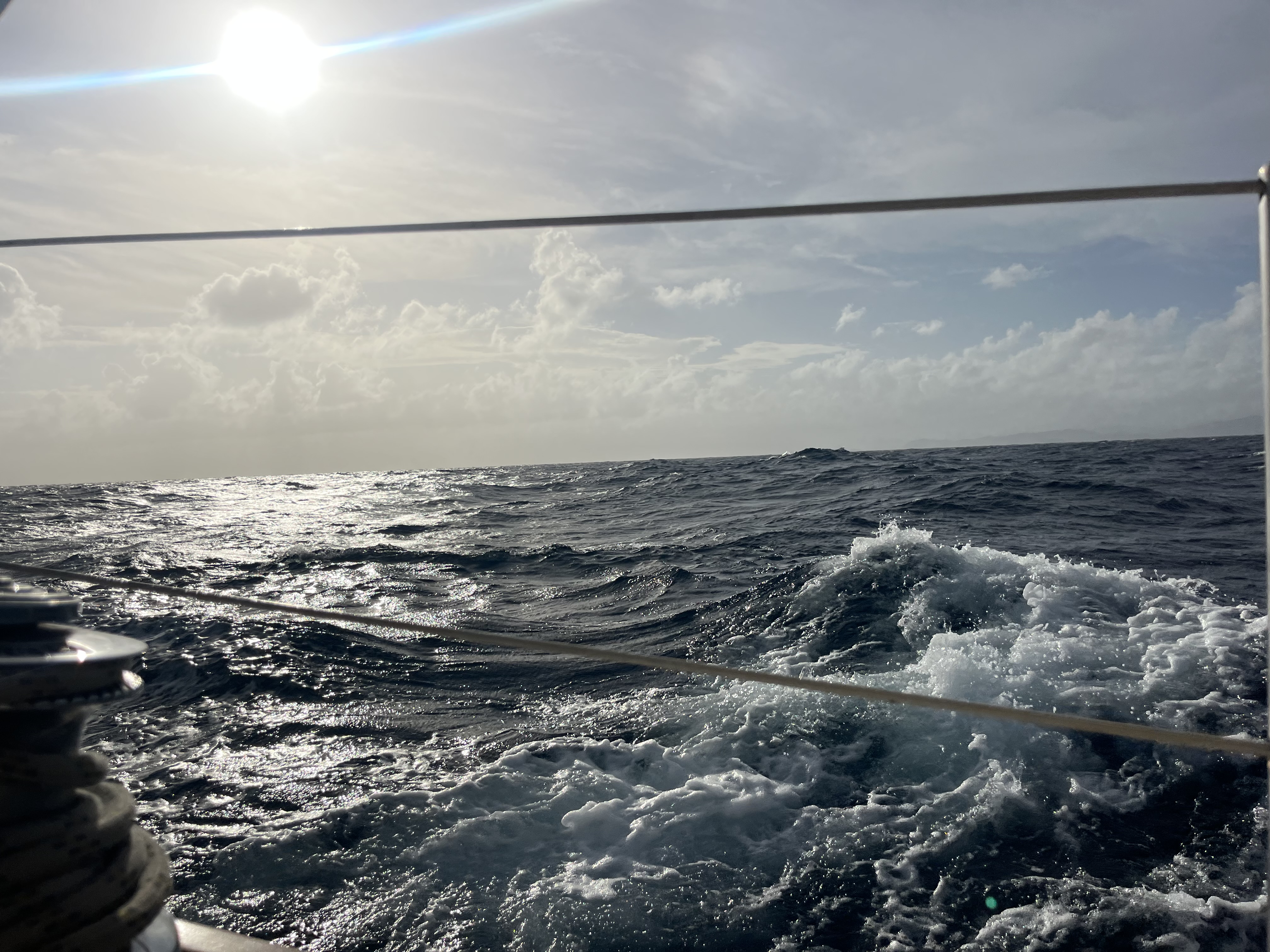
But when daylight broke, we encountered unexpectedly large waves—4 to 5 meters high (12-15 feet) which could not be explained by the local winds. Initially, I attributed them to the rapidly shallowing seafloor, but I later realized they originated from the Windward Islands, unbuffered by South America. North of Colombia winds that been blowing at 30-35Kts, gusting 40 the previous night.
I went below to check the engine’s oil and coolant. While securing the floorboard, a wave struck BEHEMOTH on her starboard side throwing me across the galley. I hit my forehead on the oven handle, causing a minor but bloody injury. Dizzy but functional, I returned to the cockpit.
Juan David was struggling with the helm as BEHEMOTH surfed down some waves and slid into the troughs of others. I told him we had to shake out the reefs to give the boat more power in those seas. Reluctantly, I let him handle the task, but the halyard became stuck in the clutch. Eventually, I took over and freed the jam. With one reef in the main, a couple of rolls in the genoa, and the staysail flying, BEHEMOTH surged forward.
We jibed and set a southerly course toward land, surfing down waves. Juan David rested, and I took the helm as Marina, still uneasy, observed from the cockpit. At 11:00, we prepared for another jibe to position ourselves north of the breakwater. With Juan David back at the helm, we spent an hour on a course of 140°, then jibed one last time. Exhausted, we engaged the autopilot and let it guide us toward the breakwater. I fell asleep in the cockpit.
At 13:00, as shipping traffic increased, Juan David woke me. Fortunately, most vessels were anchored and we didn’t need to adjust course or use the VHF. By 14:00 we crossed the breakwater and hailed Shelter Bay Marina on Channel 77.
As we entered the marina and prepared to dock, I realized we had no reverse—the propeller shaft had disconnected from the transmission again. Steering toward the main dock, Juan David leaped ashore with a line to stop BEHEMOTH before she collided. It was a disastrous finale to an otherwise memorable passage.
To make matters worse, Marina discovered she’d miscalculated the travel time to the airport and would miss her flight. Eventually, a towboat brought BEHEMOTH to her slip, and Marina resigned herself to leaving the following day.
Under heavy rain from a passing squall, we walked to the marina’s restaurant to celebrate with drinks and a late lunch. That night, we went to bed early and slept soundly for some 12 hours.
The next day, I handled BEHEMOTH’s papers at the migration office in Colón, got our passports stamped, and accompanied Marina to the airport. Upon returning, Juan David and I stowed gear, cleaned the boat, and packed. That evening, we enjoyed drinks and dinner in the cockpit, listening to his playlists. He departed after lunch the following day, and I a couple of hours after sunset. I had a G&T at the bar, this time alone, before heading to the airport.
With no reason to go to San Diego, I flew to Istanbul and then Bangkok, abandoning plans to complete my world tour.
Despite the challenges, we all have fond memories of the passage, really a shake down sail for BEHEMOTH. I still wonder if my frustrating experience in Cartagena was an outlier or indicative of a broader issue—too many cruisers and not enough skilled workers. I hope BEHEMOTH receives better care in Panama.
Now back in Hua Hin with Sofia, Natalia, her mother, and Woland, we had a lovely Christmas celebration. I’m looking forward to the new year, when BEHEMOTH will finally reach the Pacific.





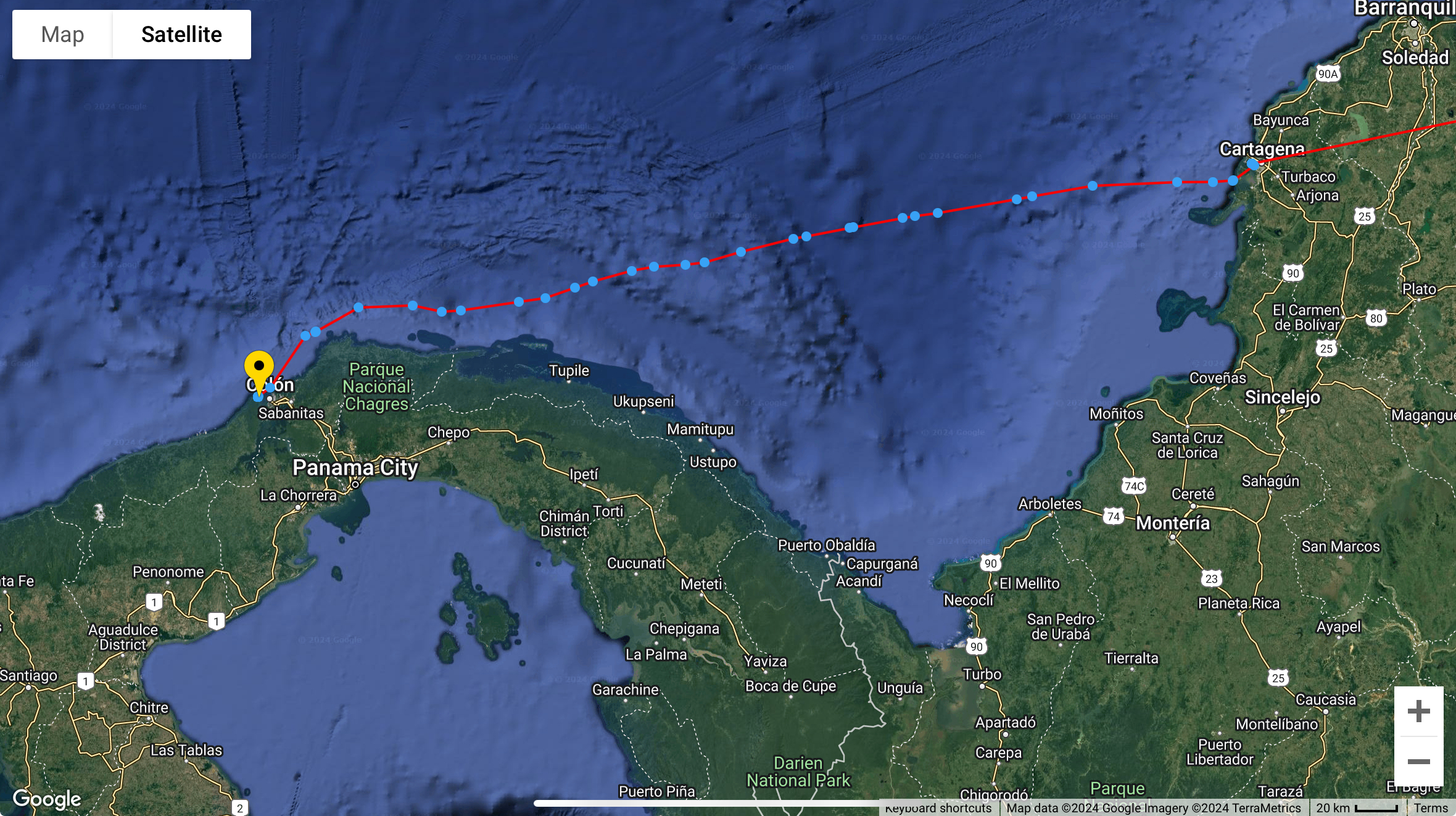
 Sailing to the Pacific